[ad_1]
Incomes and location affect childhood vaccination in NZ
Family wealth and geography are major factors determining childhood vaccination rates around New Zealand, according to new research. University of Canterbury (UC) GeoHealth Laboratory Post-Doctoral Fellow Lukas Marek has investigated immunisation trends around the country from 2006 to 2017 using millions of records from the National Immunisation Register (NIR) and census data.
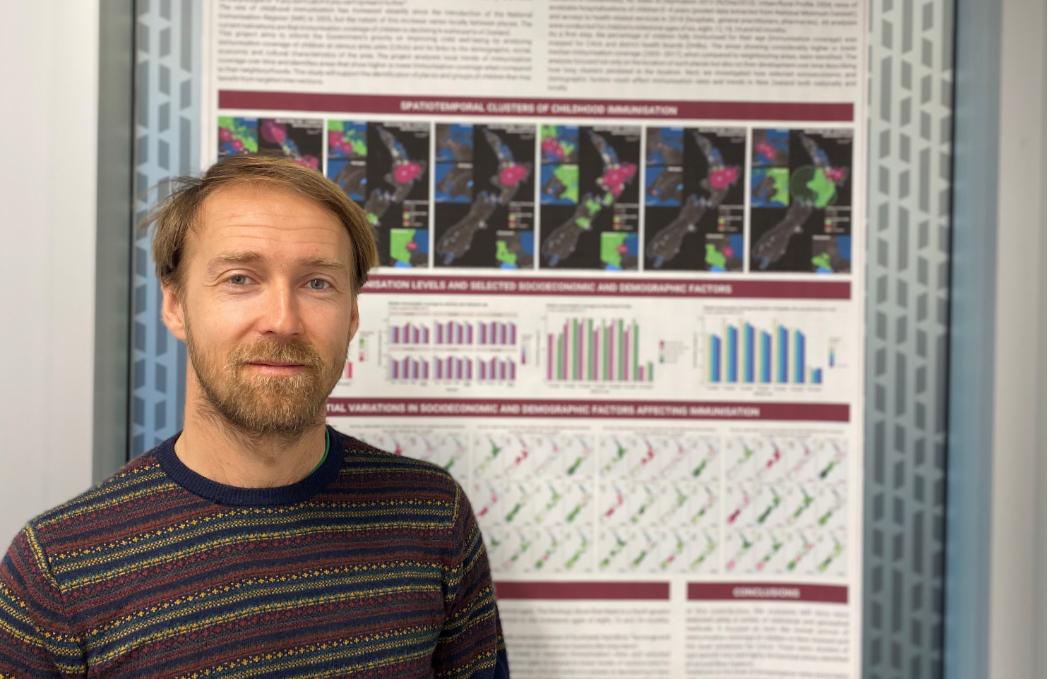
Dr Lukas Marek’s main research interest is currently focused on geovisualisation and spatial analyses of health data using spatial and spatiotemporal modelling, and spatial statistics.
University of Canterbury (UC) GeoHealth Laboratory Post-Doctoral Fellow Lukas Marek has investigated immunisation trends around the country from 2006 to 2017 using millions of records from the National Immunisation Register (NIR) and census data.
The overall rate of childhood immunisation has increased steadily in New Zealand since the introduction of the NIR in 2005.
But Dr Marek says recent evidence suggests immunisation coverage of children is dipping, possibly because of the rise of “vaccine hesitancy” among parents. This refers to people delaying or refusing vaccines despite them being freely available.
Dr Marek found the most deprived areas had the lowest number of children vaccinated against common childhood diseases.
[ad_2]
More at the source