
[ad_1]
“This has been transformational in that it is widely used throughout the world and is now an essential and highly-used medical device.”
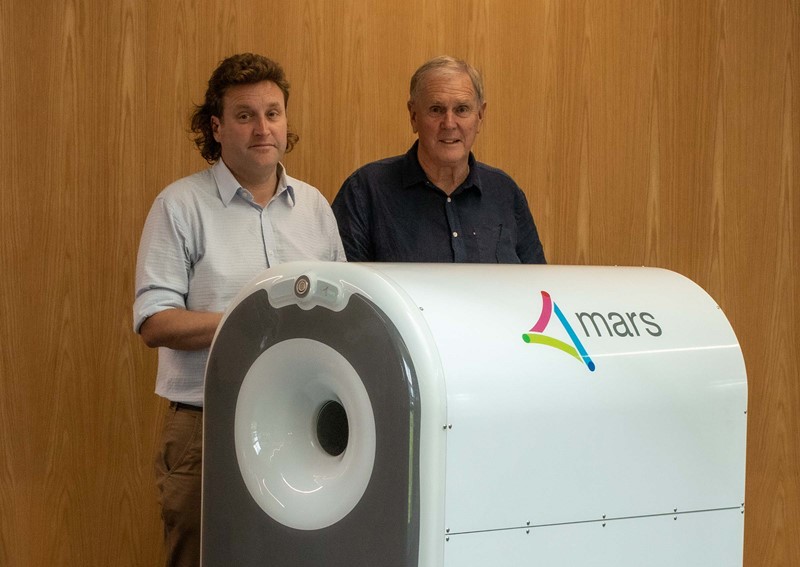
A more recent medical innovation is the MARS Scanner, the world’s first 3D colour scanner developed by father-and-son professors Phil and Anthony Butler. Their company, MARS Bioimaging Ltd, invented the device drawing on technology developed at CERN, the European Organisation for Nuclear Research, which operates the Large Hadron Collider. Clinical trials using a compact scanner for diagnosing hand and wrist injuries begin soon, with one of the scanners to be installed at Pacific Radiology’s after-hours clinic in Christchurch.
 Other hi-tech Canterbury luminaries include Sir Gil Simpson, a businessman and programmer who developed LINC (a software development tool) and founded international software company Jade Software, and Sir Angus Tait, a trailblazer in radio communications who founded Tait Electronics (now Tait Communications). The latter company employs more than 600 people around the world, but its global headquarters remain in Christchurch, where its principal design, engineering, and manufacturing facilities are based.
Tait’s head of communications Bryn Somerville says, from the start, Sir Angus focused not just on his own business, but also fostering electronics scholarship and research and development. He believed that a vibrant ecosystem would be good for the industry as a whole — an ethos that continues today with the company’s owner trust providing substantial support for research at the University of Canterbury and for engineering programmes at primary and secondary-school level.
“Sir Angus never stood in the way when entrepreneurial young Tait engineers and salespeople decided to leave and have a crack on their own account,” Somervile says.
“In fact, they often went not just with Sir Angus’ good wishes but also with a quiet loan in their pockets to help them get started.”
[ad_2]
More at ChristchurchNZ