[ad_1]
Physics, biomechanics and the love of croquet
Croquet may bring to mind lazy summer afternoons on the lawn or Alice in Wonderland’s flamingo mallets, however University of Canterbury (UC) Sport Coaching academic Dr Jenny Clarke takes it far more seriously. The world’s top-ranked female player and New Zealand’s 2019 Player of the Year, she is also one of the top international researchers on croquet coaching and performance techniques.
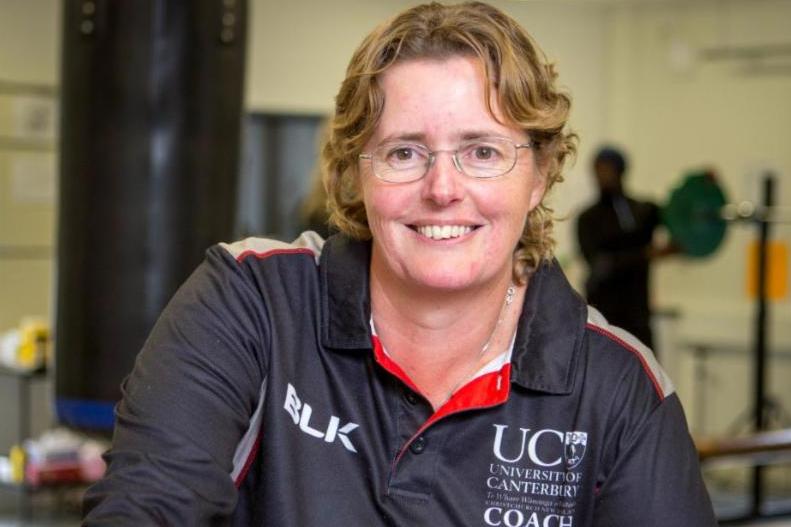
Dr Jenny Clarke is a world class croquet player whose research at UC is contributing to the sport internationally.
In a glowing review, Croquet UK noted the new book also covers the psychological aspects of self-development, match preparation, competing effectively, as well as equipment, statistics and a history of top-level play. It has everything an aspiring champion croquet player could want and Dr Clarke could have hung up her croquet shoes right there, but she had her sights on the next goal.
Her latest contribution to croquet is the application of Motion Capture technology to assess wrist injury risk in the croquet swing. In a lesser-known sports code that receives limited attention (and funding), this research is ground-breaking. Providing detailed insights, it has the potential to improve performance and limit injuries.
“In croquet, wrist injuries are a major problem,” Dr Clarke explains. “And considering that many players are over 60 years old, they don’t need to be doing something that will cause repetitive injuries.”
To dive deep into the biomechanics of the wrist action, Dr Clarke brought Canterbury’s croquet players into a lab at UC and fitted them with retroreflective markers that were lit up by infrared light and tracked by a 3D motion capture system to enable analysis of each players’ movement pattern. She found that the more the wrist moves during the swing, the more the mallet twists sideways as it is being swung. This is not necessarily an optimal outcome, as more wrist movement creates greater risk of injury, and the sideways twist is a recipe for poor performance. The results were published in the academic journal Applied Sciences.
[ad_2]
More at the source