
[ad_1]
3D printing helps turn ‘bleach’ into non-toxic rocket fuel
A University of Canterbury Engineering student is using 3D printing to help turn hydrogen peroxide into a non-toxic rocket fuel for the growing aerospace market.
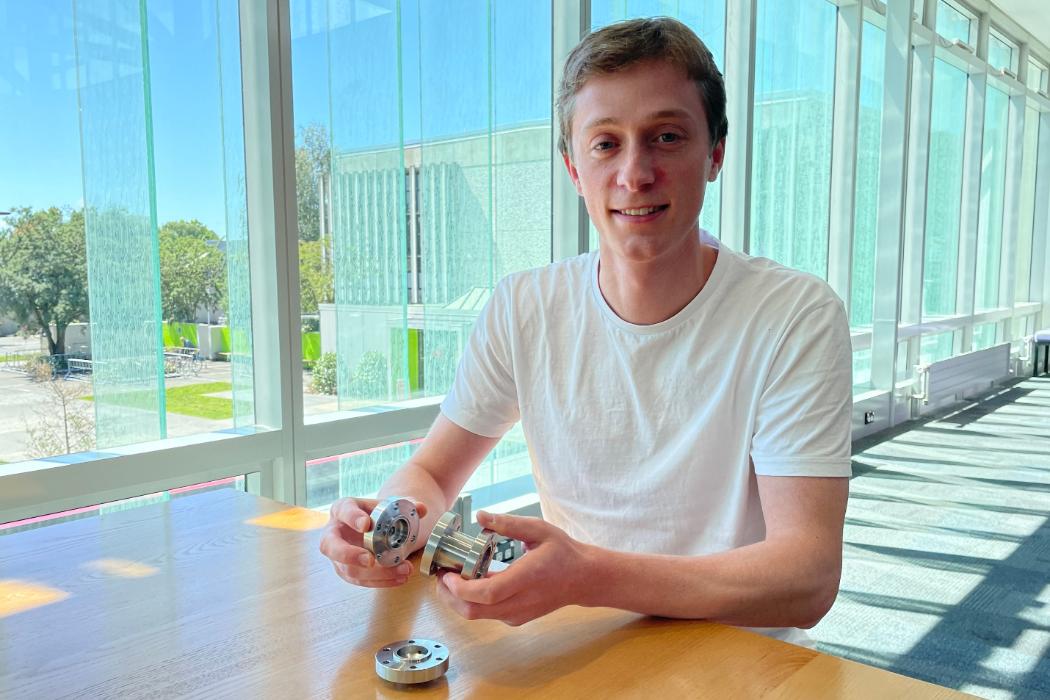
Chemical and Process Engineering PhD student Simon Reid with the test bed that will hold the catalyst structure for testing.
His interest is in the intersection of 3D printing and aerospace, and he is currently working on a 3D printed catalyst bed that will enable more efficient use of concentrated hydrogen peroxide (a bleaching agent) as a propellant for rockets requiring low to medium thrust.
Hydrogen peroxide is a much less toxic alternative to hydrazine, a commonly used aerospace propellant for low to medium thrust applications.
Hydrazine is a suspected carcinogen and requires additional safety equipment and protocols when in use which drives up the cost of using the fuel.
Alternatively, hydrogen peroxide is largely non-toxic to humans and has common household uses such as bleaching hair or to clean wounds.
[ad_2]
More at the source